Ontime and Stressfree Development withMoney Back Guarantee...
Ontime and Stressfree Development withMoney Back Guarantee...
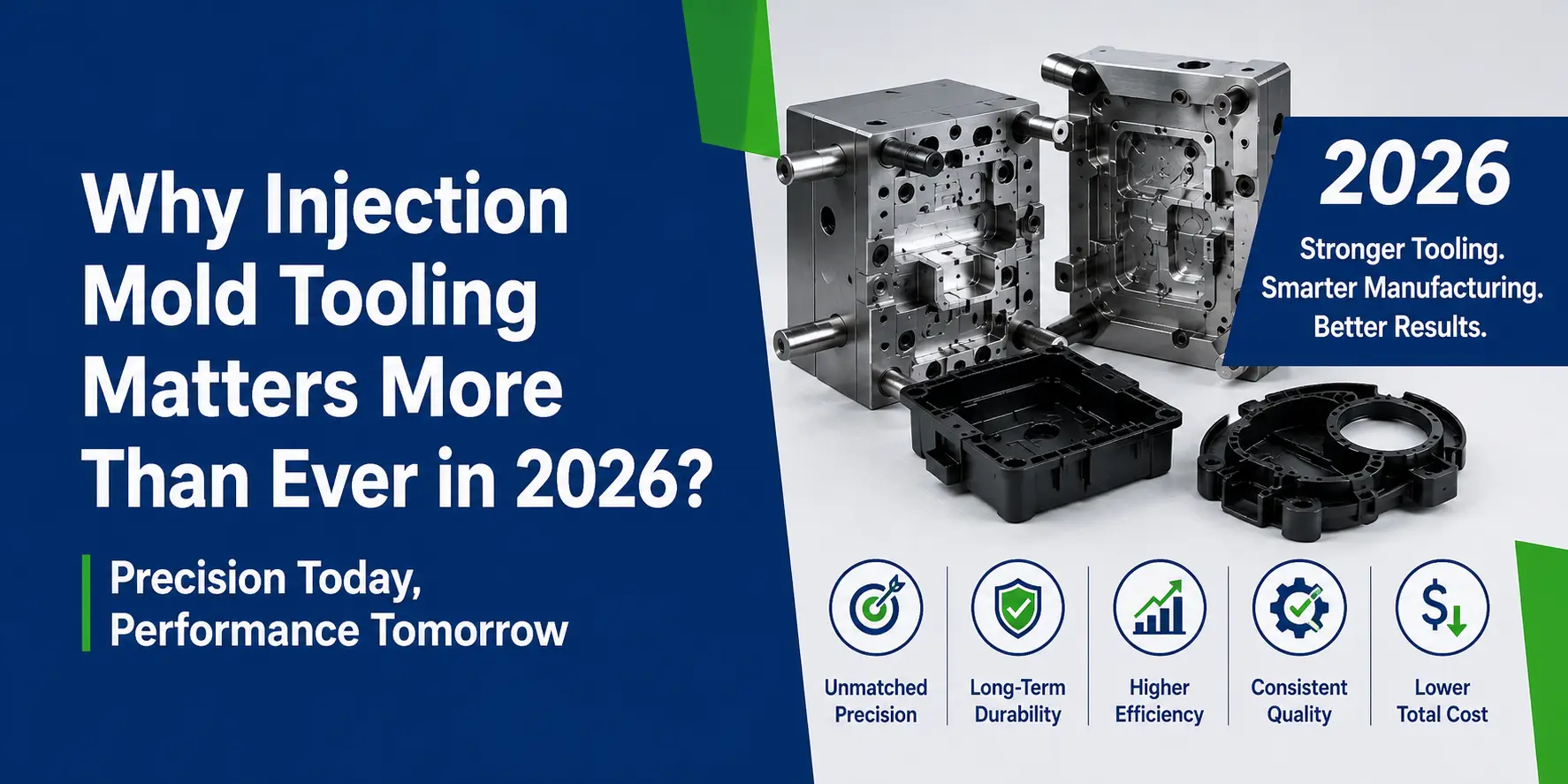
Mold tooling serves as the backbone of all plastic part production. It is the single most impactful choice made for any new project. Most problems that appear later in production are baked in here. Poor tooling leads to consistent defects, wasted material and avoidable delays.
The right tooling choice impacts part quality for ten years or more. There is no higher stake phase than mold design and build. The quality of injection mold tooling sets the ceiling for every possible outcome. No amount of process tuning can overcome a badly based tool.
Good injection mold tooling removes common production problems. Most manufacturers underestimate the importance of this step. It is common to treat tooling as a commodity rather than a critical asset.
The surface finish on the mold transfers to the plastic part. Poor tool polish creates rough parts that are completely unmarketable. Even minor alignment issues cause consistent flash and dimensional errors. Worn tooling produces wide and inconsistent wall thickness part to part.
Precision machining of the tool ensures consistent and tight tolerances. Tool steel hardness directly resists wear during high volume production runs. Venting quality inside the mold eliminates burn marks and trapped air.
The quality of injection mold tooling defines every characteristic of the finished part. No amount of process adjustment can overcome deficiencies in base tooling. Even the best moulding operator cannot fix a bad tool. The injection mold tooling is the single largest factor in final part quality.
The faulty molds cause complete and unplanned production line shutdowns. Unscheduled tool repairs mean multiple lost days of active production. Inconsistent parts require additional and time consuming quality checks.
Defective tooling leads to rapid and expensive scrap material buildup. Emergency tool fixes require costly overtime pay for all staff. Production quotas are almost always missed due to ongoing tool failures. Delivery commitments are broken when tooling does not perform as expected.
The injection molding tooling issues cause more schedule delays than any other factor. Most manufacturers underestimate this risk during the quoting phase. Small upfront savings on tooling create very high downstream costs. The injection molding tooling reliability is the foundation of any predictable production schedule.
The runner system layout controls the exact travel path of molten plastic. Gate size and type directly affect fill speed and required injection pressure. Cold slug wells catch contaminated material at the leading flow front.
The balanced runners ensure even cavity filling in all multi cavity molds. Sharp corners inside runners create unnecessary pressure loss and heat buildup. Sprue diameter directly affects overall injection pressure requirements. Flow leaders guide material correctly into hard to fill areas of the part.
The plastic injection tooling determines almost every characteristic of material flow. Process tuning can make minor adjustments but cannot fix bad flow design. This is the most commonly overlooked aspect of low cost tool builds. The plastic injection tooling design dictates the upper limit of achievable part quality. The injection molding tool design balances all of these competing requirements from the start.
The channel placement controls part cooling rate and overall production cycle time. Uneven cooling causes significant part warping and hidden internal stress. Conformal cooling follows part geometry for completely uniform heat removal.
The straight drilled channels are easier to manufacture but far less effective. Channel diameter directly affects coolant flow rate and total heat transfer. Distance from the part surface directly changes overall cooling efficiency. Baffles and bubblers properly cool deep ribs and bosses in complex parts.
The plastic injection molds tooling is the only factor that determines cooling performance. No process adjustment can make heat leave plastic faster than the tool allows. Cooling design is the largest opportunity to reduce part unit cost. The plastic injection mold tooling quality directly determines long term production cost per part. The molds tooling manufacturing quality shows most clearly in cooling channel execution.
|
Plastic Injection Molds Tooling Capabilities |
||
|---|---|---|
|
Capability |
Value for Clients |
Result |
|
Custom mold design |
Tool made for exact part needs |
Better fit and function |
|
CNC mold machining |
Precise steel cuts |
Tight tolerances |
|
Multi-cavity tooling |
More parts per cycle |
Higher output |
|
Prototype tooling |
Early part testing |
Faster design checks |
|
Production tooling |
Long-term molding support |
Stable part quality |
|
Mold repair |
Fix worn or damaged tools |
Less downtime |
|
Mold maintenance |
Keeps tool in good shape |
Longer tool life |
|
Technical guidance |
Better design choices |
Fewer molding issues |
Plastic Injection Molds brings decades of specialist mold making expertise. The company specialises in custom tooling for a very wide range of industries.
An in house design team optimises all molds for reliable manufacturability. Advanced CNC machining ensures extremely precise individual tool components. A rigorous quality control process validates every mold before shipment. Permanent technical support helps clients solve any ongoing production challenges.
The company has a proven track record with complex high volume tooling projects. Full details and consultation are available at plastic-injectionmolds.com. The mold tool design is the core capability that separates good tooling from great tooling. Every decision is made with full knowledge of downstream production requirements. No corners are cut that will create additional cost or delay for the customer. The mold tool design is reviewed and signed off at three separate stages before manufacture.
1: Why is mold tooling important in injection molding?
High-quality mold tooling ensures accurate dimensions, smooth finishes, consistent part quality, and longer production life while reducing defects and downtime.
2: How does mold tooling affect production costs?
Well-designed tooling lowers scrap rates, shortens cycle times, reduces maintenance, and minimizes unexpected production delays, saving long-term manufacturing costs.
3: Why are cooling channels critical in mold tooling?
Proper cooling channel design improves heat removal, reduces part warpage, shortens cycle times, and increases overall production efficiency.
4: Can poor mold tooling cause part defects?
Yes. Poor tooling can lead to flash, sink marks, warping, dimensional inaccuracies, burn marks, and inconsistent product quality throughout production.
5: What are the benefits of custom injection mold tooling?
Custom tooling is designed for specific product requirements, providing better precision, reliable performance, faster production, and longer tool life.
Mold tooling determines the success or failure of every injection moulding project. It delivers consistent output run after run after run. Part performance, final appearance and long term durability all trace back to tool design.
Production efficiency and waste reduction depend entirely on proper tooling choices. The best process engineers in the world cannot fix a poor tool. The most important decision for any moulding project is made long before the first part is run.
Good tooling is the difference between reliable low cost parts and expensive ongoing problems. More businesses than ever are finding out poor quality tooling wastes thousands of dollars in scrap, downtime and delays. Good tooling pays for itself very quickly. If you want to talk about building or upgrading your tooling, call us at (647) 294-5240 or email info@plasticinjection-molds.com.