Ontime and Stressfree Development withMoney Back Guarantee...
Ontime and Stressfree Development withMoney Back Guarantee...
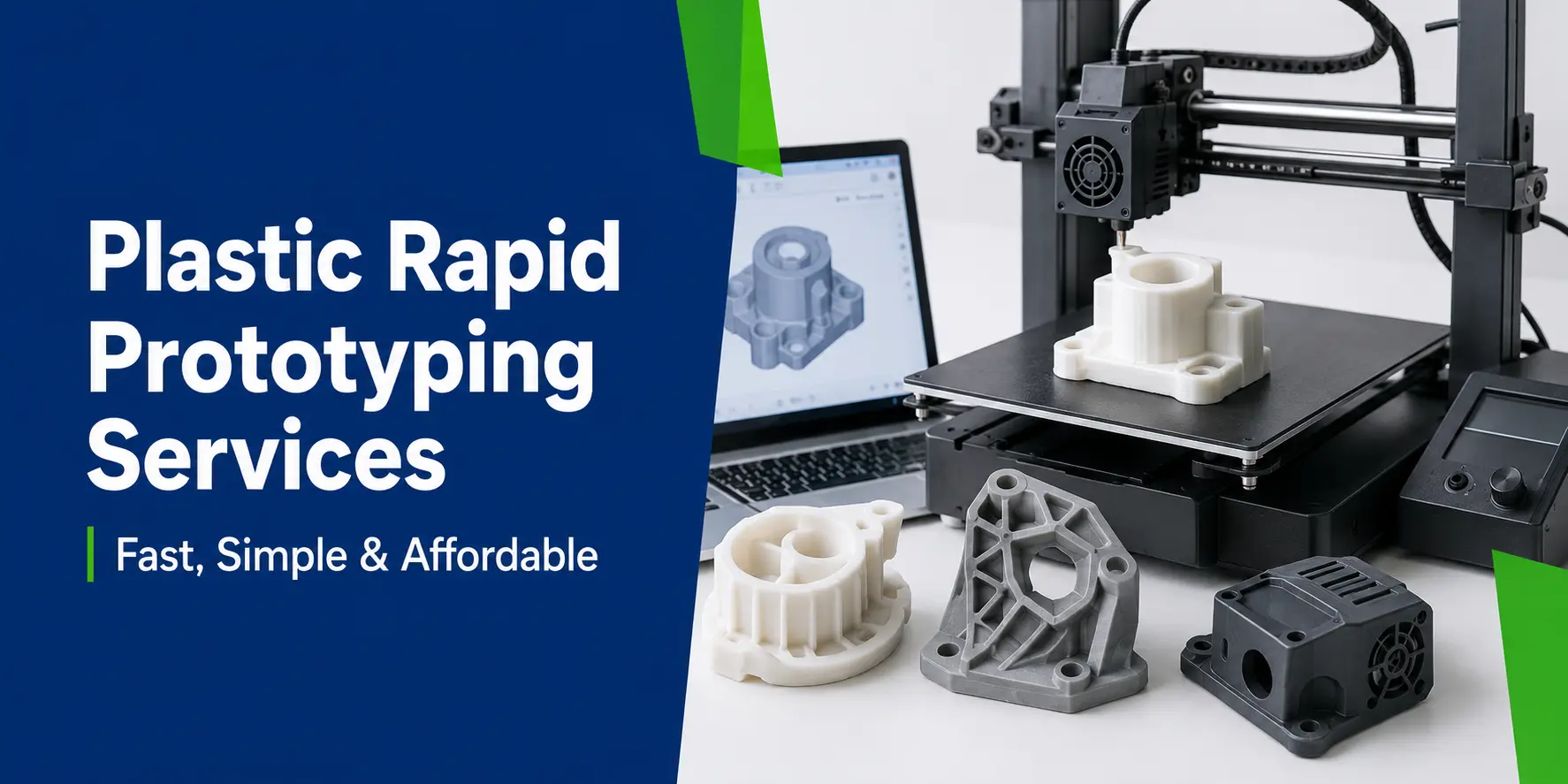
Speed from concept to physical part acts as the core benefit of modern prototyping workflows. The process sees consistent use across a very wide range of industries today. It reduces project risk significantly before teams commit to full production tooling.
Plastic Injection Molds offers full end-to-end prototyping support for all project types. Plastic rapid prototyping services cut total development timelines by an average of 40 percent.
It refers to the process of building physical plastic test parts quickly from digital design files. It skips the long lead times associated with traditional permanent tooling steps. The low-volume rapid prototyping services support batch runs up to 1000 units with no permanent tooling.
It uses native CAD data to produce real functional parts within days. It bridges the gap between initial digital design and full-scale manufacturing. Prototype manufacturing services deliver consistent, fast turnaround for all project requirements.
The engineers upload the final 3D CAD file to start the prototyping process. Appropriate material and production methods get selected based on project requirements. The machine builds the required part layer by layer or via soft tooling. Plastic rapid prototyping services include full end-to-end support from initial file review to final delivery.
The finished part gets reviewed, post-processed, inspected, and shipped to clients. Every completed part includes a full dimensional inspection report with the shipment. The rapid prototyping plastic manufacturer follows this standardized process for every order. The full workflow from file upload to delivery usually takes between 3 and 5 business days.
It is lightweight yet strong enough to support real functional testing. It is very easy to mold and shape to match even complex part geometry. A wide range of material grades are available for every operating condition.
It mimics final production material properties more closely than resin alternatives. Rapid injection molding prototyping uses the same production-grade materials as final mass production.
CNC prototyping services deliver parts with tight tolerances for high-precision industry use cases. Every industry has unique material and tolerance requirements that get matched during initial selection.
The facility supports a full range of different prototyping methods for all use cases.
Available methods include SLA (Stereolithography) for high-resolution surface finish. SLS (Selective Laser Sintering) supports complex geometry with no support structures. FDM (Fused Deposition Modeling) delivers a very fast, low-cost turnaround for early design checks.
CNC machining for plastic parts delivers production-grade material properties and tight tolerances. Soft tooling for low volume injection molding supports production grade batch runs. Industrial rapid prototype manufacturers maintain all these production methods in-house.
|
Method |
Best For |
Accuracy |
Surface Finish |
|
SLA |
Detailed parts |
Very high |
Smooth |
|
SLS |
Functional parts |
High |
Slightly rough |
|
FDM |
Concept models |
Medium |
Layered |
|
CNC Machining |
Tight tolerance parts |
Very high |
Excellent |
|
Soft Tooling |
Low volume runs |
High |
Production-like |
Digital Rapid Prototyping design files go straight to production machines with no intermediate steps. Lead times stay very short, measured in days rather than multiple months.
Design changes get implemented very fast without high additional cost. Rapid prototyping plastic injection molding services deliver a consistent 3- to 5-day turnaround for standard orders.
Yes, finished parts withstand use conditions during extended testing. Teams test fit, form, and full functional performance against all requirements. CNC prototyping services deliver parts with identical material properties to final production.
Potential design flaws get identified long before full mass production. This saves time and raw material cost over the full course of the project. Low-volume rapid prototyping services support testing across hundreds of identical parts.
The team accepts STL, STEP, IGES, and native SolidWorks file formats for all projects. Standard wall thickness guidelines are followed for all submitted part designs. An industrial rapid prototype manufacturer serves all major industry verticals.
Draft angles and required tolerances are fully reviewed before production starts. The internal team checks all files for printability and issues before any production. High-precision plastic prototyping services provide free DFM feedback as part of initial file review.
The tight tolerances can be achieved down to ±0.1mm for CNC-produced parts. Multiple surface finish options are available to match final production requirements. Rapid injection molding prototyping supports direct scaling from prototype to full production.
Final parts match required dimensions very closely to original design specifications. Post-processing operations further improve accuracy and surface finish quality. Plastic rapid prototyping services provide full dimensional inspection data for every shipped order.
A full range of post-processing finishing options are available for all shipped parts. These include sanding and polishing to achieve smooth cosmetic surface finishes.
Additional options include painting and texture coating to match final production appearance. Plating and anodizing are also available for specific performance requirement use cases.
Clear or matte finish options are applied to match final product design requirements. Prototype manufacturing services include standard finishing as part of base order pricing.
Plastic Injection Molds operates from a central location with global reach and service coverage. It specializes in plastic molds and end-to-end rapid prototyping support. Rapid prototyping plastic injection molding services support a smooth transition from prototype to full production.
It maintains a full in-house team covering design, tooling, and production operations. Plastic rapid prototyping services provide post-delivery support for all test result interpretation.
It holds the trust of clients across the automotive, medical, and electronics industry sectors.
It delivers fast turnaround with strict multi-stage quality checks at every production step. Prototype manufacturing services include full inspection reports with every shipment.
It provides custom-tailored solutions for every project size and requirement. High-precision plastic prototyping services deliver parts with ±0.1mm tolerance accuracy.
1. How long does plastic rapid prototyping take?
Most standard orders ship within 3–5 business days, depending on part complexity and chosen method (SLA, SLS, FDM, CNC, or soft tooling).
2. How much does a plastic prototype cost?
Cost varies by material, method, tolerance, and quantity. SLA/FDM prints are cheapest for concept models; CNC and soft tooling cost more but deliver production-grade material properties.
3. Which prototyping method is best for functional testing?
CNC machining or soft tooling, since both use production-grade plastics that match final part strength, heat resistance, and durability — unlike concept-stage SLA or FDM prints.
4. What file formats are needed to start a project?
STL, STEP, IGES, or native SolidWorks files. The team reviews wall thickness, draft angles, and tolerances before production and provides free DFM feedback.
5. Can rapid prototypes be scaled directly into mass production?
Yes — rapid injection molding prototyping uses the same production-grade materials as final manufacturing, so tested designs can move straight into full-scale tooling.
to discuss your design, materials, dimensions, and production needs. Email detailed part design files to info@plasticinjection-molds.com. You can choose our 24/7 support for questions that come up during an active project.
Schedule a free 20-minute strategy call to discuss a new prototype and plan the next steps. Send your inquiry today, and our team will reply within one business day.