Ontime and Stressfree Development withMoney Back Guarantee...
Ontime and Stressfree Development withMoney Back Guarantee...
It is the most critical phase in the entire manufacturing lifecycle. Most product failures originate in mistakes made during this exact stage. Many teams drastically underestimate the complexity of this transition.
The prototype to production services remove most of the inherent risk. A bad transition will erase all gains made during earlier development. Plastic Injection Molds specialises in seamless transitions between these stages.
The process reduces overall time to market for new products. It also eliminates the vast majority of avoidable production risks.
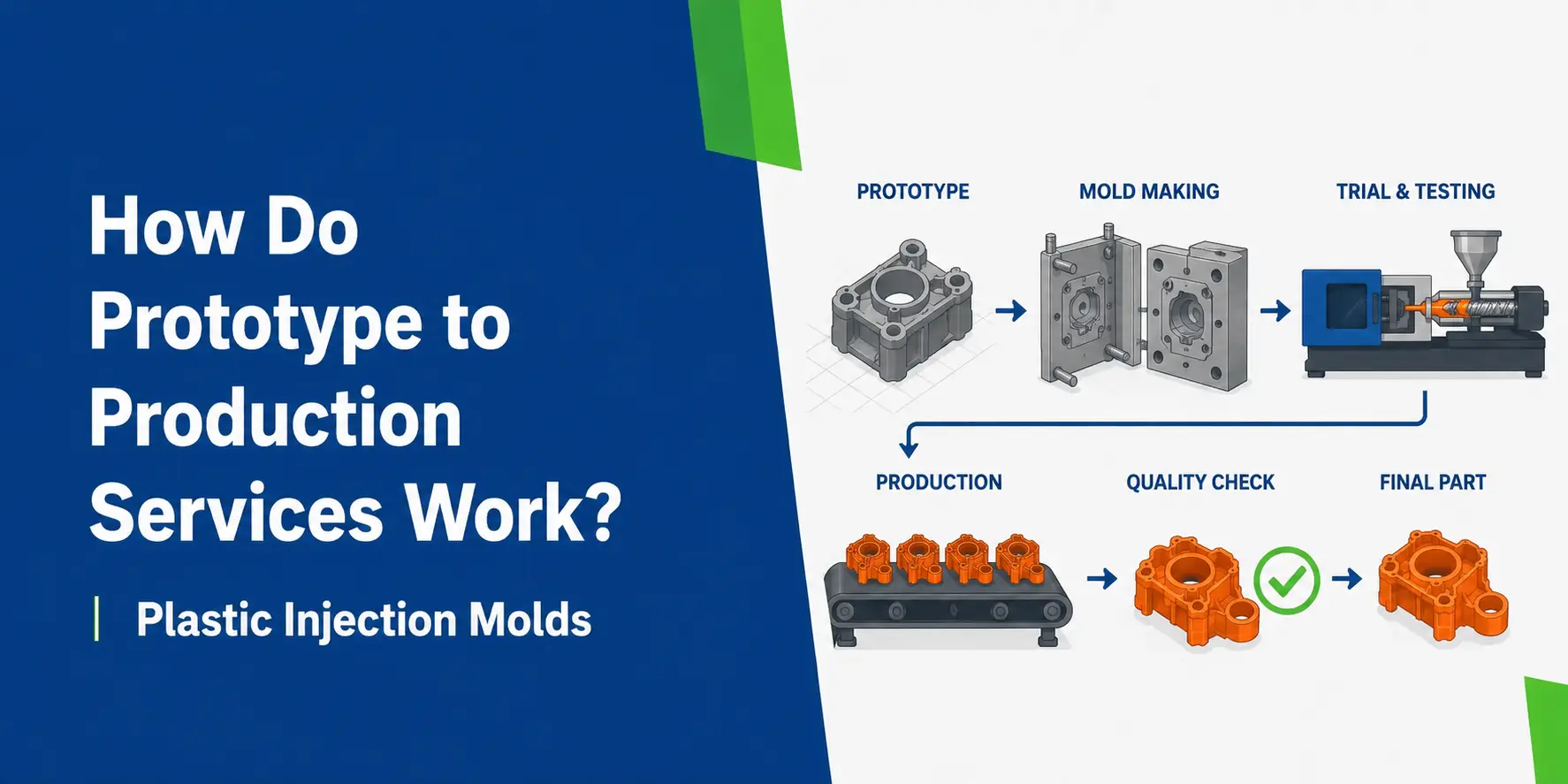
The process begins with a complete CAD file analysis and design review. Engineers evaluate every feature for manufacturability and function. They identify small flaws that will break later production parts. This step prevents all avoidable downstream issues.
Next the team completes full material selection for prototype testing. They match material properties exactly to the intended final use. They do not just use the cheapest available print material. This is one of the most commonly skipped critical steps. Good plastic prototyping services that skip this step deliver useless parts.
After final material selection, the team creates rapid tooling for first samples. This tooling is not intended for full volume long term production. It is built to produce accurate parts as fast as possible. Once first parts come off tooling, the team runs functional testing of initial prototypes.
The final step of this phase is design iteration based on test results. The rapid prototype manufacturing provides the speed to run multiple iterations fast.
3D Printing
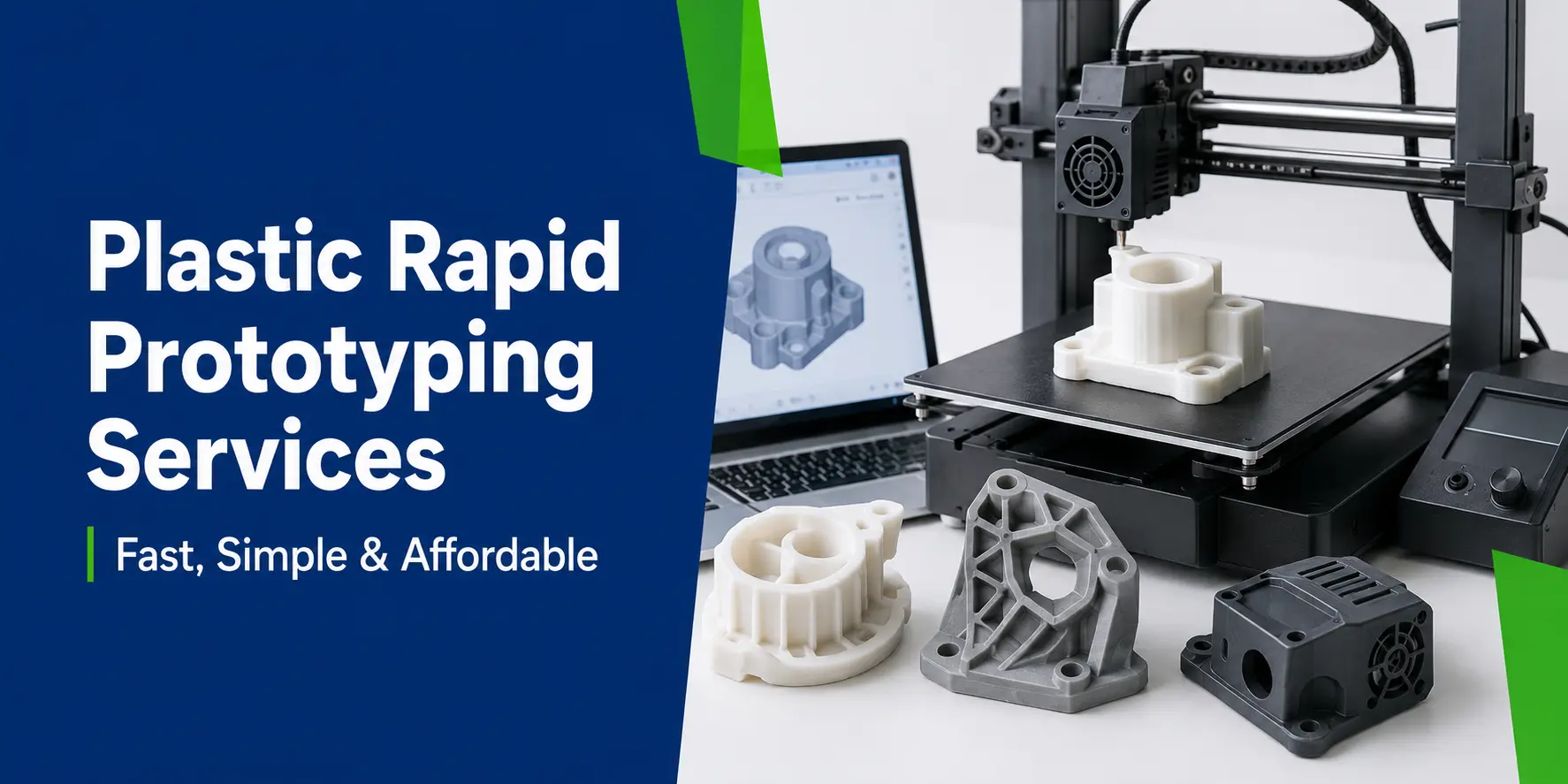
3D printing remains the fastest method for quick concept validation. It produces parts in one working day for most geometries. It is best for form and fit testing, not high load function. The plastic rapid prototyping relies on this technology.
CNC Machining
CNC machining produces the most precise prototypes available today. It cuts solid material rather than depositing it layer by layer. It delivers near production grade material properties in finished parts.
Soft Tooling
Soft tooling is used for limited production runs of parts. It produces parts that are identical to final production parts. It costs a small fraction of the price of full production tooling. It allows teams to test parts in the exact intended material. The prototype injection molding cost will increase at this stage.
Bridge Tooling
Bridge tooling is designed for small batch market testing. It fills the gap between prototype and full production tooling. It can produce up to ten thousand parts before wearing out. It allows teams to enter the market while final tooling is built.
Aluminum Molds
The aluminum molds provide the fastest turnaround of any production mold. They cost roughly half of an equivalent steel mold for most parts. They can produce up to one hundred thousand parts over their lifetime. The injection molding prototypes are for aluminum tooling.
|
Tool Types and Applications |
||
|
Tool Type |
Volume Range |
Modification Ease |
|
Rapid Prototype |
1-50 parts |
Very easy |
|
Soft Tool |
50-1000 parts |
Easy |
|
Bridge Tool |
1000-10000 parts |
Moderate |
|
Production Tool |
10000+ parts |
Difficult |
|
Family Tool |
Multiple parts |
Complex |
Once a final prototype design is agreed, the validation phase. The prototype to production services exist specifically to manage this transition.
The plastic prototyping services include full validation as a standard part of the process. Many teams attempt to skip this step and encounter expensive failures later. This phase adds two to four weeks to the total project timeline. The quick turn plastic prototypes can be used to speed up validation.
Moving too early results in very expensive modification or complete rework. Moving too late results in missed market opportunity and lost revenue.
The first signal is clear and confirmed market demand for the product. The second is complete design stability with no open changes. The third is a volume threshold that justifies the cost of production tooling. The fourth is full finalisation of all quality and performance requirements. The fifth is clear timeline pressure that justifies moving forward now.
The prototype to production services will provide neutral guidance on this decision. They will not push teams to move earlier or later than makes sense for the project. The prototype injection molding cost is the most common point of consideration.
ISO Certification Compliance
All production facilities operate to agreed international quality standards. These standards provide a consistent baseline for all process and output. Regular independent audits confirm ongoing compliance with all requirements.
Statistical Process Control
Statistical process control monitors every step of the production process. It identifies small shifts in performance before they result in bad parts. It is the most reliable method of maintaining consistent quality.
Incoming Material Inspection
Every batch of incoming material is inspected before it enters production. No material is ever accepted based solely on supplier provided paperwork. This prevents material related quality issues in finished parts.
First Article Inspection
A full first article inspection is completed on the first three production parts. Every dimension and feature is measured and documented against the drawing.
Continuous Improvement Programs
All processes are subject to ongoing regular review and improvement. Small incremental changes are implemented to reduce cost and waste. This process continues for the entire lifetime of the product in production. The rapid prototype manufacturing teams build these quality checks into every step.
Most delays and unexpected costs occur during this exact transition. We structure this process to eliminate as much risk as possible for every project. We have an experienced engineering team to guide every step of the process.
We maintain full in house tooling capabilities for all mold build and modification. We apply strict quality control at every single stage of the transition. We assign a dedicated lead to provide project management expertise.
We understand that most teams have very little experience with this transition. Most of the problems that occur here are entirely predictable and avoidable. The plastic rapid prototyping teams are often not set up to manage this step well. This is the point where most good prototype projects turn into bad production projects.
1. What is the difference between a prototype and production part?
A prototype is made to test a product's design and function before mass manufacturing. A production part is the final version that is manufactured in larger quantities using the approved design.
2. Why is prototyping important before production?
Prototyping helps identify design issues, improve product performance, and reduce costly manufacturing mistakes before full-scale production begins.
3. How long does it take to move from prototype to production?
The timeline depends on the product's complexity, design changes, material selection, and tooling requirements. Simple projects move faster, while complex parts may require additional testing.
4. Can prototype parts use the same material as production parts?
Yes. Many prototypes can be made with production-grade materials, allowing engineers to test real-world strength, fit, and performance before manufacturing.
5. How do prototype-to-production services reduce manufacturing costs?
By testing designs early, optimizing tooling, and fixing potential problems before mass production, these services help reduce waste, improve efficiency, and lower overall production costs.
Moving from prototype to production services requires careful planning and execution. Most companies do not hold this expertise inside their own teams.
Plastic Injection Molds provides expertise throughout the entire journey. We support the project from the prototype to the millionth part. The cheapest quote will never deliver the best outcome.
Prototype to production services take your idea all the way from first test part to full ongoing production. You do not have to work with multiple different companies at each step. We create your first prototype, help you make adjustments and improvements, and manufacture the final production mold. To discuss your full project timeline call us at (647) 294-5240 or write to info@plasticinjection-molds.com.