Ontime and Stressfree Development withMoney Back Guarantee...
Ontime and Stressfree Development withMoney Back Guarantee...
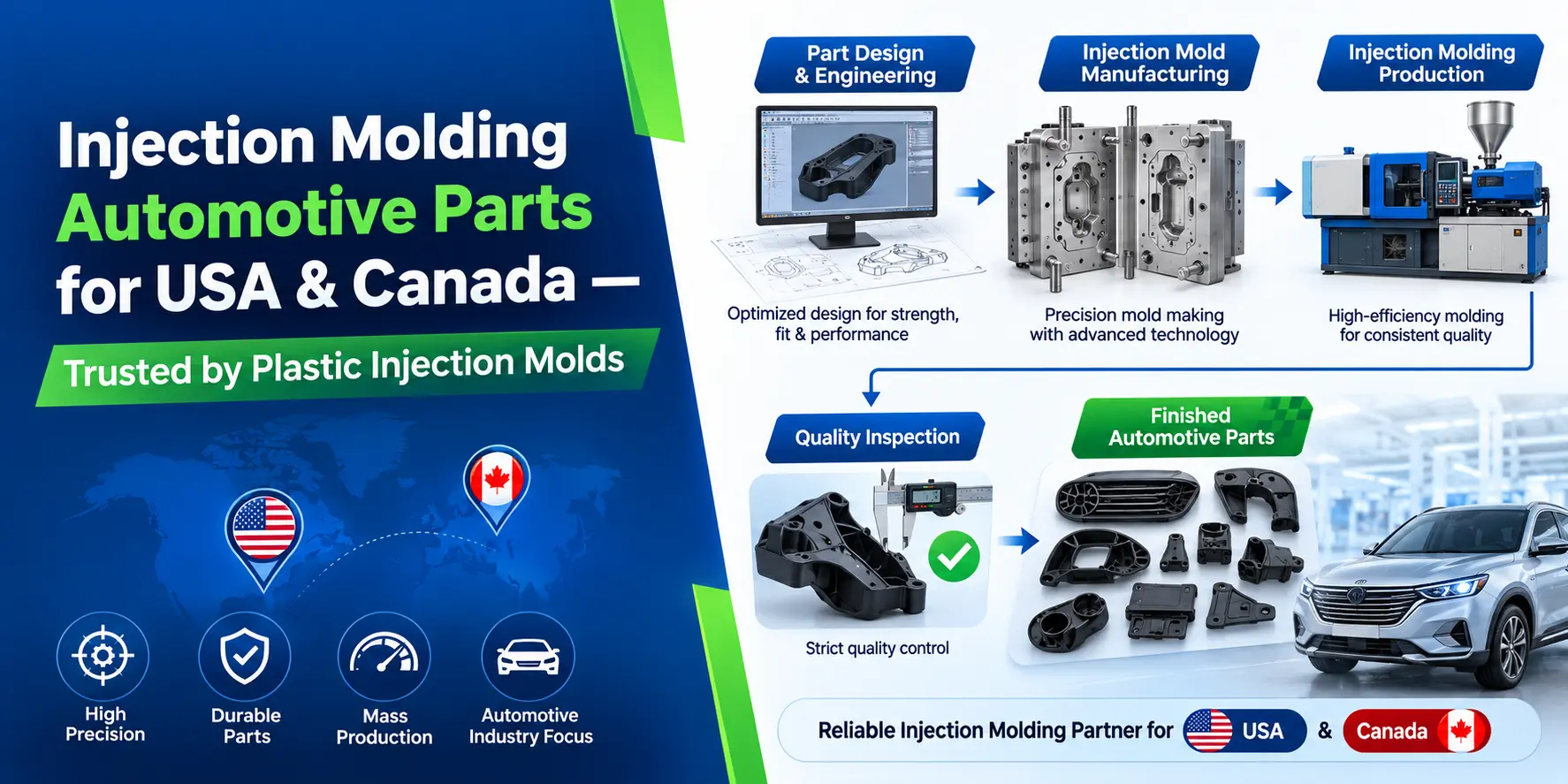
The automotive sector demands consistent high grade plastic components. The high volume injection molding automotive parts form the backbone of modern vehicle production. Injection molding is the leading manufacturing method for all car components.
Plastic Injection Molds serves the entire North American automotive industry. This reliable supplier prevents costly unplanned assembly line shutdowns. Consistent production of injection molding automotive parts keeps production lines running smoothly.
The injection molding for automotive parts produces the majority of components found in modern passenger vehicles. It delivers the consistency and volume required for global automotive production. The injection molded plastic auto parts represent the single largest category of components in modern vehicles.
Dashboard panels and instrument clusters require extremely tight dimensional tolerances. The centre console parts must maintain consistent fit across millions of production units. Seat belt components and buckles meet strict federal mandatory safety standards. Interior door handles operate reliably for the entire service life of the vehicle.
Air vent grilles and trim pieces require an exact colour match across different material batches. These parts are among the most visible components inside any modern vehicle.
Bumper brackets and clips provide consistent retention through normal road use. Exterior door handles withstand extreme temperatures and road salt exposure. These parts receive minor attention until they experience a failure.
Mudguards and wheel arch liners absorb impact from road debris and gravel. They also reduce road noise and protect underlying chassis components from corrosion.
Under hood components include fluid reservoirs and engine covers. HVAC system parts maintain air tight seals across wide temperature ranges. Electrical connectors and housings provide a reliable connection for vehicle wiring.
|
Automotive Parts by Vehicle Section |
||
|
Vehicle Section |
Components Injection Molded |
Material Commonly Used |
|
Interior Cabin |
Dashboard, door panels, console, cup holders, vents |
ABS, PP, PC/ABS |
|
Exterior Body |
Bumper covers, grilles, mirror housings, trim |
PP, PC/ABS, TPO |
|
Under Hood |
Fluid reservoirs, air intake, engine covers, ducts |
Nylon PA66, PP, glass-filled |
|
Lighting System |
Headlamp housings, tail light lenses, reflectors |
PC, PMMA, PP |
|
Electrical |
Connectors, sensor housings, junction boxes |
Nylon, PBT, PPS |
|
HVAC System |
Vent ducts, blower housings, control knobs |
PP, ABS, POM |
The automotive injection molding requires far stricter controls than other industrial sectors.
The following practices are standard for all automotive production:
ISO 9001:2015 certified processes apply to every operation within the facility. In house tool design and mold making eliminate external quality variation. CMM inspection confirms dimensional accuracy for all tools and production parts. Material certification tracking ensures all resin matches the approved specification.
The facility operates a full climate controlled molding environment to remove ambient variation. Clean room capabilities are available for all sensitive electrical components. The high quality plastic injection molding automotive parts start with repeatable processes.
This manufacturer serves tier one and OEM clients across USA and Canada. The facility operates a modern press fleet ranging from 50 to 500 plus tons.
Engineering support is available from initial design through to full serial production. Rapid prototyping and tool sampling services support new program development.
The location allows two day ground shipping to North American assembly plants. The company maintains long term open partnerships with most major tier suppliers.
All operations are structured to meet the strict JIT delivery requirements of the industry. The technical team has working knowledge of all automotive industry standards. The injection molded automotive parts will form an even larger share of future electric vehicle designs.
Additional core capabilities include:
This is one of the most experienced injection moulding automotive companies operating in North America.
Certifications are not just administrative paperwork for automotive suppliers. They represent independent verification that processes meet consistent minimum standards.
IATF 16949 remains the single most important certification for any supplier. This defines the complete quality system required by all global OEMs.
ISO 9001 provides the base quality management standard for all industrial operations. ISO 14001 defines requirements for environmental management and waste reduction.
UL certification is mandatory for all electrical components used in passenger vehicles. FDA approval is required for all interior parts that come into contact with food. The injection molding automotive parts continue to replace metal components in every vehicle system.
RoHS and REACH compliance is mandatory for all parts sold in North America. IMDS material data reporting is required for every single part number.
Conflict minerals compliance is now a mandatory requirement for all suppliers. Manufacturers must provide full traceability for all minerals used in any component. Failure to meet this requirement results in immediate removal from approved lists.
The automotive injection molding suppliers must hold all of these certifications to operate.
All automotive parts must meet formal standardised test requirements before approval. These tests are defined and enforced by independent bodies and federal regulators. The injection molded automotive parts must pass every one of these applicable tests.
ASTM D638 defines the standard test method for tensile strength of plastics. ASTM D256 defines standard Izod impact resistance testing for thermoplastic materials. ASTM D648 defines standard heat deflection temperature testing for parts.
SAE J1960 defines the flammability standard for all interior vehicle components. UL 94 defines flammability ratings for all electrical and plastic components. FMVSS standards define additional federal mandatory flammability requirements.
UV exposure testing measures colour fastness and degradation over long term sun exposure. This test is particularly critical for all visible interior and exterior trim components.
VOC and fogging testing measures volatile organic compound emissions from interior parts. These standards exist to protect interior air quality for vehicle occupants. Most OEMs enforce standards far stricter than the minimum legal requirement.
1. What is automotive injection molding?
Automotive injection molding is the process of producing durable and precise plastic parts for vehicles using custom molds.
2. What automotive parts can be injection molded?
Common parts include dashboards, bumpers, interior trims, clips, engine covers, and electrical housings.
3. Why choose injection molding for automotive parts?
It offers high precision, consistent quality, fast production, and cost-effective manufacturing.
4. Does Plastic Injection Molds offer custom automotive solutions?
Yes, Plastic Injection Molds provides custom mold design, prototyping, and production for automotive applications.
5. Which markets does Plastic Injection Molds serve?
The company supplies precision automotive injection molded parts to customers across the USA and Canada.
Conclusion
Injection molding remains essential for all automotive manufacturing. Plastic Injection Molds delivers certified automotive grade production solutions. Advanced materials and controlled processes meet extreme operating requirements. The role of injection molding will continue to grow in the coming years.
We manufacture high quality injection molded automotive parts that meet all common industry standards for strength and consistency. We work with both large OEMs and small tier suppliers, delivering on time every single run. All parts are fully inspected before they leave our facility. To discuss your next automotive production run, call us at (647) 294-5240 or email info@plasticinjection-molds.com.